Free Shipping Over $60
NYCs Growing Interest in Magic Mushroom Chocolate And Ceremonial Cacao
New York has always been the city where cultural shifts get named, examined, and argued about before the rest of the country even notices them. From the Beat Generation writers who gathered in Greenwich Village coffee shops to the food journalists who turned Brooklyn’s restaurant scene into a global conversation, NYC has a genius for turning subcultures into subjects. Right now, that same genius is being applied to magic mushrooms — and the growing visibility of magic mushroom chocolate in New York’s alternative food world is a story that the city’s food media is only beginning to fully tell.
This post is purely educational. Nothing here constitutes medical or legal advice.
A Brief History Of Magic Mushrooms In American Food And Culture
The story of magic mushrooms in American culture is inseparable from New York City. It was a New York banker and amateur mycologist, R. Gordon Wasson, whose 1957 LIFE Magazine account of a Mazatec magic mushroom ceremony first introduced the sacred fungi to mainstream American readers. The article landed like a stone in still water — rippling outward through New York’s intellectual, artistic, and spiritual communities in ways that would shape American culture for generations.
Before Wasson’s piece, magic mushrooms existed in American awareness only as rumor and anthropological footnote. Afterward, they became a symbol — of spiritual possibility, of indigenous wisdom, of a door that Western rationalism had kept locked. New York’s writers, poets, and countercultural thinkers seized on magic mushrooms with characteristic intensity, and the city became an unlikely hub for psychedelic curiosity throughout the 1960s.
The legal crackdown of 1970 pushed magic mushrooms underground, but it couldn’t erase the cultural memory. New York’s food and wellness media has always maintained a kind of ambient awareness of magic mushrooms — occasionally surfacing the topic, then letting it recede, then surfacing it again as the cultural moment demanded. What’s different now is that the surfacing feels permanent.
How New York Media Has Covered Magic Mushrooms Over The Decades
Tracking magic mushrooms through New York’s media history is a fascinating exercise. In the 1970s and 80s, coverage was almost entirely cautionary — magic mushrooms appearing in news stories as a danger, a curiosity, or a symbol of the counterculture’s excesses. In the 1990s, as rave culture brought psychedelics back into urban social life, NYC’s alternative press began covering magic mushrooms with a more nuanced eye, situating them within harm reduction frameworks and subcultural practice.
The real shift came in the 2010s, when New York food and wellness media began to grapple seriously with the plant medicine renaissance. Publications that had never touched the subject started running thoughtful long-form pieces on magic mushrooms — their history, their therapeutic potential, their cultural significance. By the time NYU published its landmark studies on magic mushroom therapy, the New York Times, New York Magazine, and dozens of Brooklyn-based food and wellness outlets were all covering magic mushrooms as a legitimate subject of public interest.
Magic mushroom chocolate entered this media conversation as a natural extension — a format that gave food journalists a concrete, culturally legible angle on an abstract subject. The image of magic mushroom chocolate as a modern ceremonial food, rooted in ancient Mesoamerican tradition and now being reimagined by New York’s artisan chocolate community, proved irresistible to editors looking for fresh ways into the magic mushroom story.
Magic Mushrooms 101 — Species, Potency, And Common Misconceptions
One of the most valuable things New York food media has done for the magic mushroom conversation is combat misinformation. For decades, magic mushrooms were conflated with all manner of dangerous substances in popular coverage, and the nuances of species, potency, and safe use were almost never addressed. Today’s more sophisticated coverage has helped New Yorkers develop a more accurate picture of what magic mushrooms actually are.
Magic mushrooms encompass a diverse family of fungi, with meaningfully different potency levels and characteristics across species. Psilocybe cubensis — the most commonly encountered magic mushroom — is considered moderate in potency and has been the subject of most clinical research. Psilocybe semilanceata, the liberty cap found across cool Northern climates, is significantly more potent per gram. Psilocybe azurescens, which grows wild in parts of the Pacific Northwest, is among the most potent magic mushrooms found in nature.
A common misconception about magic mushrooms is that all psychedelic fungi are the same. Amanita muscaria — the iconic red-and-white spotted toadstool — is a very different organism with entirely different active compounds and a distinct risk profile. Responsible magic mushroom education in New York always draws this distinction clearly, because the confusion between species can lead to genuinely dangerous decisions. NYC’s harm reduction community has worked hard to make accurate magic mushroom identification education widely available.
Harm Reduction And Magic Mushroom Education In New York
New York’s harm reduction community has played an outsized role in shaping how magic mushrooms are understood and discussed across the city. Organizations rooted in public health and community practice have developed magic mushroom education resources that are frank, compassionate, and evidence-based — treating people as capable adults who deserve accurate information rather than fear-based messaging.
The core principles of magic mushroom harm reduction — set, setting, dose, and integration — have become widely understood among New Yorkers who follow the psychedelic education space. Set refers to the mindset a person brings to a magic mushroom experience. Setting refers to the physical and social environment. Dose education addresses the enormous range of effects that different amounts of magic mushrooms can produce. And integration — the process of making meaning from a magic mushroom experience in the days and weeks that follow — is increasingly recognized as essential to healthy outcomes.
NYC’s harm reduction organizations have also done important work communicating the contraindications for magic mushrooms: who should not use them, what medications interact poorly with the active compounds in magic mushrooms, and what warning signs to watch for. This responsible, caring approach to magic mushroom education has made New York one of the most informed cities in the country on the subject.
The Rise Of Magic Mushroom Chocolate In NYC Food Conversations
Against this backdrop of growing media literacy and harm reduction education, magic mushroom chocolate has emerged as one of the most culturally resonant topics in New York’s alternative food world. It carries so much of what makes magic mushrooms interesting all at once — the ancient history, the ceremonial reverence, the modern scientific curiosity, and the artisan food sensibility that Brooklyn and Manhattan have made famous.
NYC food journalists covering magic mushroom chocolate are increasingly doing so with real depth — tracing the Mesoamerican origins of the cacao-magic mushroom pairing, interviewing harm reduction educators, and situating magic mushroom chocolate within the larger renaissance of intentional food culture in New York. The conversation has moved well beyond novelty into something more serious and sustained.
For the city’s craft chocolate makers, the magic mushroom chocolate dialogue offers an opportunity to talk about what they actually care about: the spiritual significance of cacao, the ethics of indigenous sourcing, the possibility that food can be more than fuel. In New York, where every food trend eventually becomes a cultural conversation, magic mushroom chocolate has found exactly the right home.
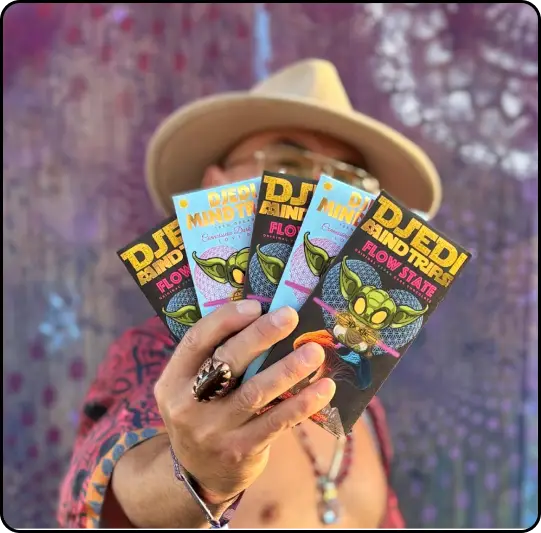
Djedi Mind Trips Magic Mushroom Chocolate In NYC
We’re Djedi Mind Trips. Welcome to the conscious side of wellness.
We were born in California with a mission that felt urgent — bring real standards to a space drowning in mediocrity. No more mystery ingredients. No more hollow promises. Just premium mushroom products made with the kind of care and intention this journey deserves.
Our lineup of chocolates, gummies, and capsules was built for the explorers, the dreamers, the deep thinkers, and the quietly curious. From our fan-favorite Strawberry Fields chocolate bar to our gentle microdose gummies, every formula is vegan, fruit-forward, and free of anything that shouldn’t be there.
We source with integrity. We formulate with purpose. We package in 100% compostable, plant-based materials because we believe the wellness of this planet and the wellness of your mind are inseparable.
We’re not chasing trends. We’re chasing trust — and we earn it one transparent, quality-obsessed batch at a time.
Our community is growing. Conscious explorers from all walks of life are finding us, and finding something they didn’t know they were missing — a brand they can actually believe in.
If you’re ready to go deeper, we’re ready to take you there.
Welcome to the trip. We’re glad you’re here.
21+ only. Consume wisely. Consult your doctor if you’re on medications.